MemoHoney Official Website › Blog › 640 mg of Amino-Acid Forms Against the Gram-Dose Trials
The dose questionMemoHoney Dosage: Why 640 mg a Capsule Sits Below the Gram Trials
Memo Honey dosage adds up to 640 mg of amino-acid forms in each capsule, taken once a day. The research on those ingredients used grams, such as 6.4 g of arginine and 2.4 g of beta-alanine, so the label amounts are far smaller than the trial doses.
This post sets each row beside its research dose, explains why one capsule cannot close the gap, and says what a buyer can fairly expect.
Every amino-acid row on the MemoHoney panel is printed in milligrams. Every trial of those amino acids was dosed in grams. This is the post that sets the two side by side.
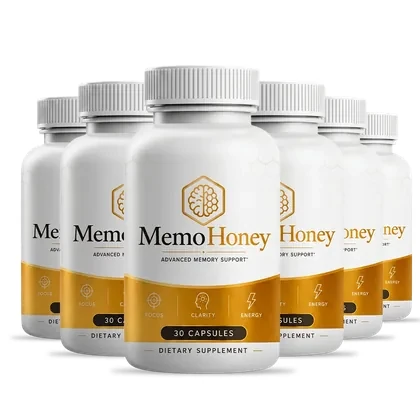
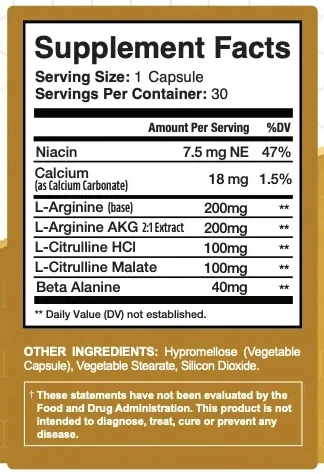
- The five amino-acid rows total 640 mg, about 520 to 540 mg of it amino acid itself; the whole panel declares 665.5 mg.
- The research behind each row used between 2.4 g and 12 g a day.
- Per row, the capsule holds between a thirtieth and a sixtieth of the trial dose.
- No trial has tested this capsule; none of the trials is evidence for it.
- Taking more capsules is not the answer: the label says not to exceed one.
Where 640 comes from
Five rows on the panel carry no Daily Value, because they are amino-acid forms: L-arginine 200 mg, L-arginine AKG 200 mg, L-citrulline HCl 100 mg, L-citrulline malate 100 mg and beta alanine 40 mg. Added together, they come to 640 mg. With the two nutrient rows, niacin at 7.5 mg and calcium at 18 mg, the whole panel declares 665.5 mg of ingredients in each capsule.
The 640 is the weight of the forms, not of amino acid alone. Arginine AKG 2:1 is two arginines bound to one alpha-ketoglutarate, the hydrochloride carries hydrochloric acid, and the malate carries malic acid. Counted out by molecular weight, those partners leave about 520 to 540 mg of amino acid in the capsule, a range because the panel does not print the malate row’s ratio. The row-by-row comparison below uses the printed amounts, which is the kinder reading of the gap.
Those are real amounts, printed row by row, and that is the reason this comparison can be made at all. A label that hid its amounts in a blend could not be checked against anything. This one can.
Milligrams and grams
A gram is a thousand milligrams. That is the whole of the arithmetic, and it is easy to lose on a label, because 200 mg looks like a large number and 6.4 g looks like a small one. The first is a fifth of a gram. The second is thirty-two times bigger.
The trials behind arginine, citrulline and beta-alanine were almost all dosed in grams a day, often several grams taken two or three times daily. That is not unusual for amino acids: they are nutrients the body handles in bulk, and it takes gram amounts to move their blood levels in a way a trial can measure.
Row by row
L-arginine, 200 mg. The one trial of arginine and cognition, a 38-person pilot in older adults, gave 6.4 g a day for thirty days. The capsule row is about a thirty-second of that.
L-arginine AKG, 200 mg. The controlled trials of arginine alpha-ketoglutarate, including the eight-week pharmacokinetic and performance trial, used 12 g a day, taken as 4 g three times daily. The capsule row is a sixtieth of that, and part of the row is the carrier.
L-citrulline HCl, 100 mg. Across the citrulline blood-pressure meta-analysis, doses ran from 3 to 9 g a day, and only the arms at 6 g or more moved diastolic blood pressure. The capsule row is a sixtieth of that 6 g threshold.
L-citrulline malate, 100 mg. A pilot trial in older women gave 3 g a day for six weeks alongside exercise. The capsule row is a thirtieth of that.
Beta alanine, 40 mg. The older-adult imaging trial gave 2.4 g a day, and the sports-nutrition position stand recommends 4 to 6 g a day for at least four weeks. The capsule row is a sixtieth of the imaging-trial dose.
| Panel row | Per capsule | What the research used | In round numbers |
|---|---|---|---|
| L-Arginine | 200 mg | 6.4 g a day for 30 days in the one cognition pilot; 3 to 24 g a day across the blood-vessel trials. | about one thirty-second of the cognition-pilot dose |
| L-Arginine AKG | 200 mg | 12 g a day, 4 g three times daily, in both controlled trials; a single 3 g dose changed nothing measurable. | one sixtieth of the trial dose |
| L-Citrulline HCl | 100 mg | 3 to 9 g a day across the blood-pressure trials; only the arms at 6 g or more moved anything. | one sixtieth of the 6 g threshold |
| L-Citrulline Malate | 100 mg | 3 g a day for six weeks in older women alongside exercise; 0.1 g per kg of body weight in the performance trials. | one thirtieth of the older-women dose |
| Beta Alanine | 40 mg | 2.4 g a day in the older-adult imaging trial; 4 to 6 g a day for at least four weeks in the sports position stand. | one sixtieth of the imaging-trial dose |
Research doses are the daily amounts the cited trials gave. No trial has tested this capsule or these amounts.
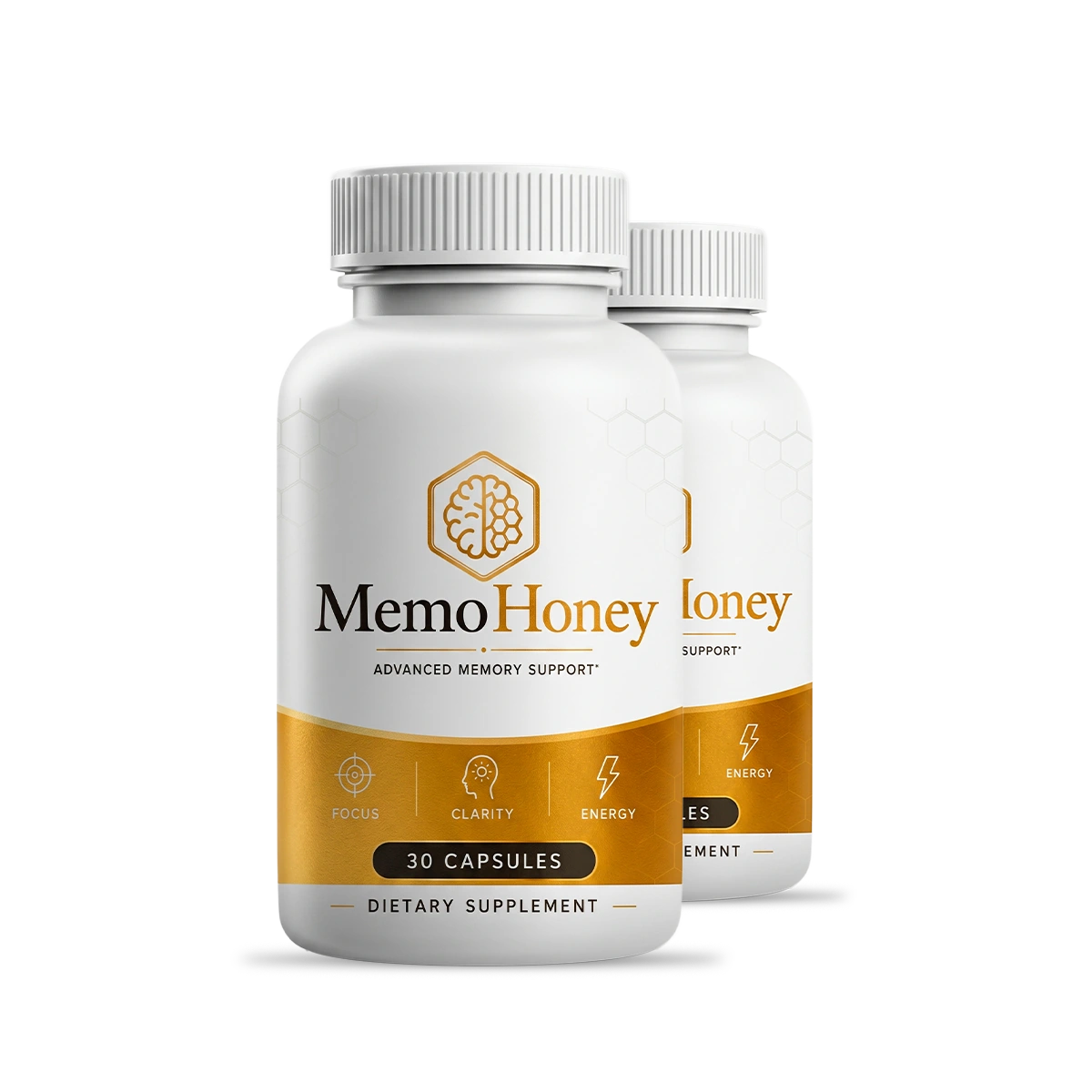
MemoHoney: every amount printed, so you can judge it
Seven rows, 665.5 mg declared, one capsule a day. A 60-day window from purchase to decide for yourself.
$79, $69 or $49 a bottle across two, three and six bottles, 60 days on every pack
Choose A MemoHoney PackOne capsule a day, 30 to a bottle. Lot MEM-26/GO-8806, shipped from the United States.
The rows grouped by pathway
Read by what they feed, the five rows fall into two groups. Arginine, arginine AKG and the two citrullines all lead to nitric oxide: arginine directly, citrulline by being recycled into arginine. Together those four rows are printed at 600 mg a capsule; with the AKG, hydrochloride and malate split off, about 480 to 500 mg of that is arginine and citrulline themselves. Beta alanine, at 40 mg, leads to carnosine, and it stands on its own.
Grouping them this way does not change the comparison with the trials, which each tested a single ingredient. It does explain the shape of the formula: most of the capsule is given to one pathway, spread across four forms, with a smaller amount for the second and a vitamin alongside.
Why one capsule cannot close the gap
The simplest reason is physical. The panel declares 665.5 mg of ingredients, and the capsule also holds its shell and two flow agents. A single capsule cannot carry the several grams a day the amino-acid trials used; that would take a scoop of powder, or a handful of capsules at every meal.
The second reason is that the formula does something different. It combines six ingredients in one daily capsule, alongside a vitamin at a nutrition-label amount. The trials each tested one ingredient, at a dose chosen to produce a measurable change in the blood, in muscle or on a scan. A combination at milligram amounts is a different product from any of them.
Neither reason is hidden. The amounts are on the label and the trial doses are in the public record. What follows from putting them together is the part a buyer should know before ordering.
Taking more capsules to approach a gram dose is not what the label allows. Its first caution is not to exceed the recommended dose, and the niacin in each capsule counts toward a 35 mg upper intake.
What the trials actually measured
It helps to know what each trial was measuring, because very few of them measured memory. The arginine pilot is the exception: it gave cognitive tests to older adults. The arginine AKG trials measured blood levels, blood flow and exercise performance in trained men. The citrulline analysis measured blood pressure. The citrulline malate pilot measured leg strength and function in older women who were also exercising. The beta-alanine imaging trial measured changes on brain scans, which is closer to the brain than any of the others but is still an image, not a memory test.
So the research behind these five rows is mostly about circulation, muscle and blood chemistry, at gram doses, over days to weeks. That is useful background for understanding why the ingredients are grouped as they are, since arginine and citrulline both feed nitric oxide. It is not a set of memory results.
Would two capsules help?
No. The label’s first caution is not to exceed one a day, and two would still be a sixteenth of the arginine pilot dose.
Are small amounts pointless?
Nobody knows, because nobody has tested them. That is a gap in the evidence, not evidence of nothing.
Why these six together?
Arginine and both citrullines feed nitric oxide; beta-alanine feeds carnosine; niacin feeds NAD. The formula groups three pathways in one capsule.
Where is the footing firmest?
The niacin row: a vitamin at 47% of its Daily Value, where the nutrition science is settled.
What the trials do and do not tell you
A trial result belongs to the dose, the people and the length of time it tested. The arginine pilot tells you what 6.4 g a day did for thirty days in older adults with cognitive impairment. The citrulline analysis tells you what 6 g a day or more did to blood pressure. None of them tells you what 200 mg or 100 mg does, because nobody gave those amounts.
So the trials are not evidence that the capsule works, and this website never uses them that way. They are the map of where each ingredient has been studied and at what scale. That is useful in its own right: it tells you what each ingredient is, what it has been tested for, and how far the printed amount sits from the tested one.
What a buyer can fairly expect

What the panel supports is modest: a once-daily capsule that combines arginine, two forms of citrulline, beta-alanine and a vitamin at a nutrition amount, taken as a routine. Buyers on this desk most often describe 3–6 weeks before they notice a change, and the reviews that say “fair at a month” outnumber the rest.
The fair way to judge it is your own trial, run properly: a baseline on day one, the same routine every day, and a decision inside the 60-day window from purchase. The guarantee page sets out how a claim works, and the pricing page compares the packs. If gram doses of a single amino acid are what you are after, a single-ingredient powder is the product that matches the trials.
Sources cited in this post
- Teotia and colleagues (2026), Comparison of the Safety and Efficacy of Oral L-arginine for the Treatment of Cognitive Impairment in Older Adults: A Prospective, Randomized, Placebo-Controlled Pilot Study, in Cureus 18(7):e112987; PubMed 42621366. Thirty-eight older adults took 6.4 g of L-arginine by mouth daily for 30 days. https://pubmed.ncbi.nlm.nih.gov/42621366/
- Campbell and colleagues (2006), Pharmacokinetics, safety, and effects on exercise performance of L-arginine alpha-ketoglutarate in trained adult men, in Nutrition 22(9):872-81; PubMed 16928472. The dose was 12 g a day, given as 4 g three times daily, for eight weeks. https://pubmed.ncbi.nlm.nih.gov/16928472/
- Barkhidarian and colleagues (2019), Effects of L-citrulline supplementation on blood pressure: A systematic review and meta-analysis, in Avicenna J Phytomed 9(1):10-20; PubMed 30788274. Trial doses spanned 3 to 9 g a day; diastolic pressure shifted only from 6 g a day upward. https://pubmed.ncbi.nlm.nih.gov/30788274/
- Ramos-Hernández and colleagues (2026), Short-term citrulline malate supplementation enhances lower-limb function in physically active older women: A pilot randomized controlled trial, in Clin Nutr ESPEN 74:103356; PubMed 42162613. Twenty women aged 60 to 75 took 3 g a day for six weeks while exercising. https://pubmed.ncbi.nlm.nih.gov/42162613/
- Ostfeld and colleagues (2024), beta-Alanine supplementation improves fractional anisotropy scores in the hippocampus and amygdala in 60-80-year-old men and women, in Exp Gerontol 194:112513; PubMed 38971131. Its twenty volunteers took 2.4 g a day. https://pubmed.ncbi.nlm.nih.gov/38971131/
- Trexler and colleagues (2015), International society of sports nutrition position stand: Beta-Alanine, in J Int Soc Sports Nutr 12:30; PubMed 26175657. Its working range is 4 to 6 g a day for four weeks or more; tingling skin (paraesthesia) is the only side effect it records. https://pubmed.ncbi.nlm.nih.gov/26175657/