MemoHoney Official Website › Guides
Reading roomGuides From the MemoHoney Desk
Two long guides from the MemoHoney desk. The memory supplement guide sets out what large trials have found and why dose and duration decide a result; the checklist guide gives ten label checks for any memory supplement, with MemoHoney scored honestly against them.
Five shorter blog posts go deeper on single rows of the panel. None of them asks you to buy anything.
The two guides
Each guide takes about eight minutes to read, cites its sources inline and ends with a full reference list.
Memory supplement guide
What the largest trials found, including COSMOS-Mind; why dose and duration decide everything; and the everyday causes of memory trouble worth ruling out first.
Choosing a memory supplement
Ten label checks for any bottle on the shelf, in the order worth running them, with MemoHoney scored against all ten and losing the points it should.
A reading path through the guides
Three steps, in the order that makes each one easier to read.
- 1
Start with the evidence
The memory supplement guide: what the largest trials found, and why grams and weeks matter more than names.
- 2
Then learn the checks
The checklist guide: ten label checks and six red flags, usable on any bottle in five minutes.
- 3
Then read one real label
The post Seven rows, six names runs the method on the MemoHoney panel, row by row.
Which MemoHoney guide answers your question
Start from the question you already have. Each row names the page that answers it and what you will know by the end of it.
| Your question | Where it is answered | What you leave with |
|---|---|---|
| Does any memory supplement work? | Memory supplement guide | What the largest trials and the evidence reviews found, in plain numbers. |
| Can this label be judged at all? | Choosing a memory supplement | Ten label checks, and the six red flags that make a bottle impossible to judge. |
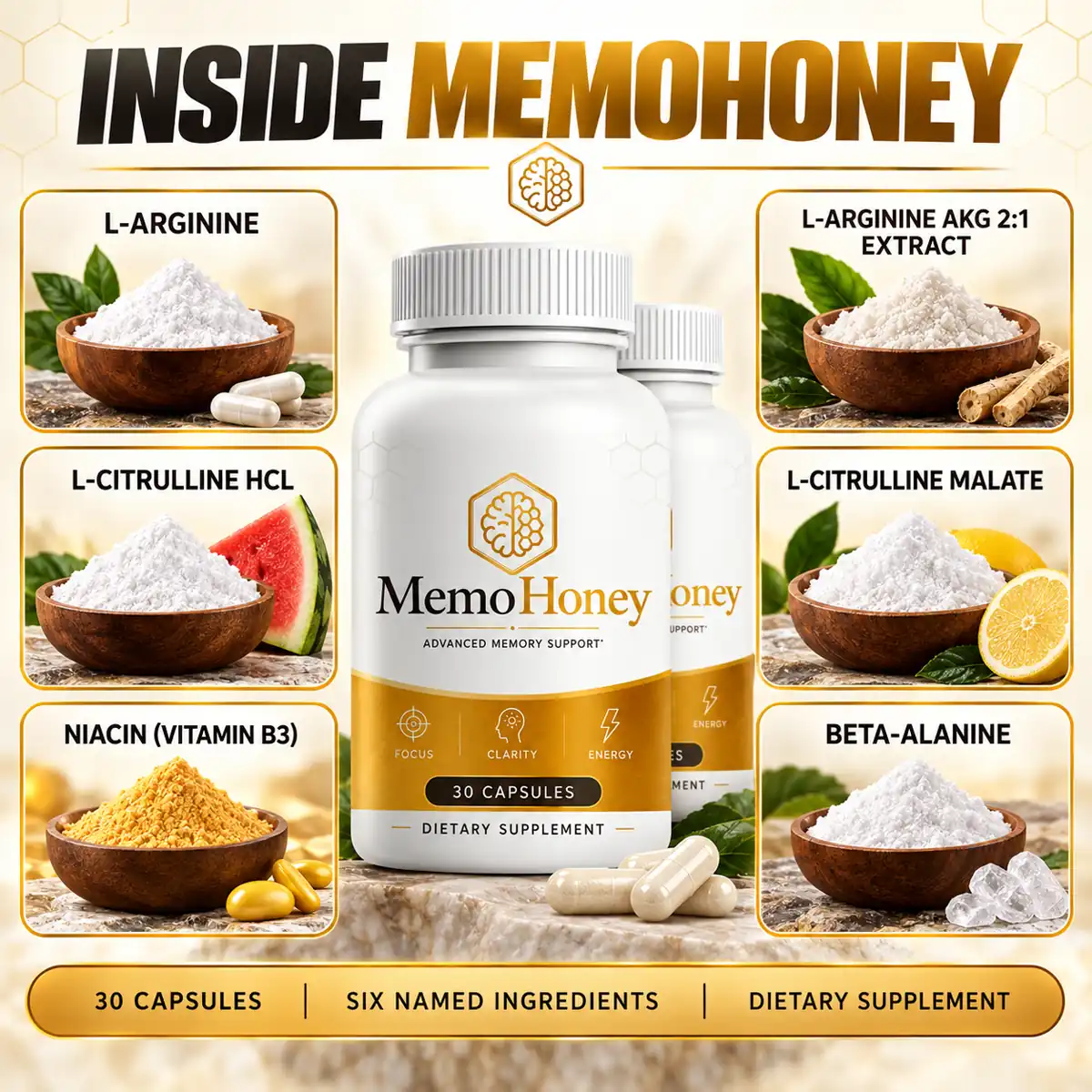
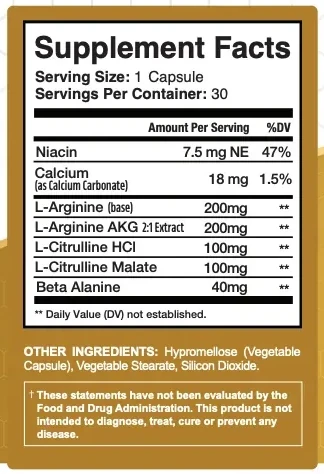
| What is in one MemoHoney capsule? | Seven rows, six names | All seven rows with their printed amounts, including the calcium row the advertising leaves off. |
| What does 7.5 mg NE mean? | The niacin post | Niacin equivalents, the 47% Daily Value and the 35 mg upper intake. |
| Are the amino-acid amounts enough? | 640 milligrams and the gram doses | Each amino-acid row set beside the gram doses the published trials gave. |
| How long before I judge it? | Planning a fair 60-day trial | The 3-to-6-week wait, the 30-day condition and the 60-day window on one calendar. |
| Is the bottle I received the real one? | Checking the bottle that arrives | The seal, the lot code and the panel, checked against the label in two minutes. |
Seven common questions, each matched to the one page that answers it in full.
Five posts from the blog
Shorter pieces, each on one question the MemoHoney panel raises.
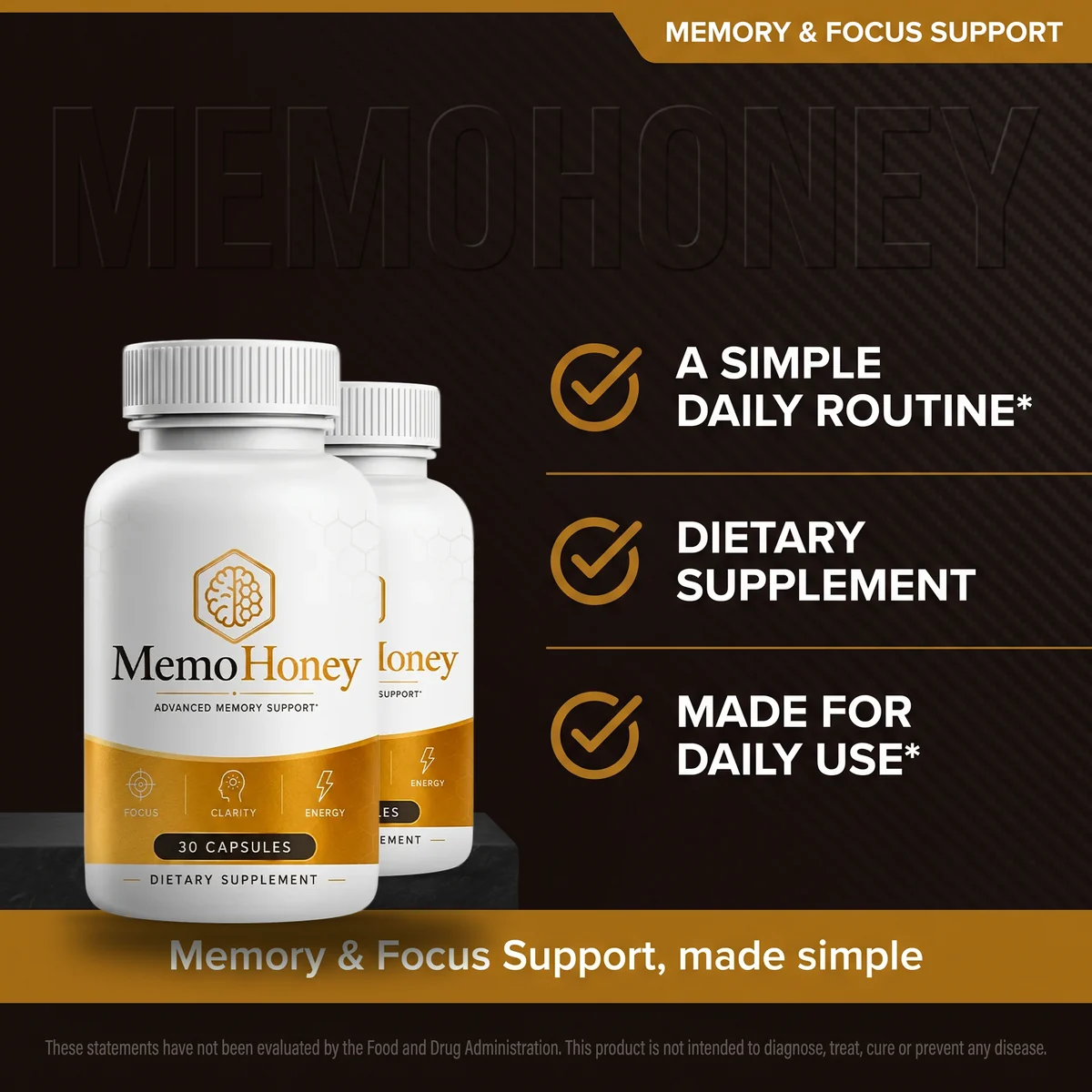
Seven Rows, Six Names: Reading the MemoHoney Panel
The panel row by row, and the calcium row the advertising leaves off.
7.5 mg NE at 47 Per Cent: The Niacin Row Explained
Niacin equivalents, the Daily Value and why this is the one row with a percentage.
640 mg of Amino-Acid Forms Against the Gram-Dose Trials
Each amino-acid row beside the gram doses the trials used.
Three to Six Weeks: Planning a Fair MemoHoney Trial
The 3-to-6-week wait, the 30-day condition and the 60-day window, planned.
Checking the MemoHoney Bottle That Arrives
Seal, lot and panel: checking the bottle against the label.
Where else this website goes into detail
The product pages these guides lean on.
Supplement Facts
The panel as printed: serving, seven rows, Daily Values, other ingredients.
Ingredients
What each row does, with the research linked beside it.
Side effects
The label’s caution and the interactions worth knowing.
Results timeline
The 3–6 weeks wait against the 30-day condition and 60-day window.
Verify a bottle
Seal, front, panel and lot, checked in two minutes.
Testing & quality
The seller’s ten marks and what each covers.
Label words the guides use
Fifteen terms that come up on a memory supplement label, and in these guides, in plain words.
Supplement Facts panel
The required box listing every ingredient and its amount per serving. On a supplement it is the statement of contents; the front of the bottle is not.
Serving size
The amount every figure on the panel refers to. On the MemoHoney panel it is one capsule, with thirty servings to the bottle.
% Daily Value
How much of a day’s reference amount one serving supplies. It exists only for nutrients with a set reference, such as niacin and calcium.
Daily Value not established
The mark on a row with no reference amount. Amino acids such as arginine and citrulline carry it; it is normal, and not a warning.
mg NE
Milligrams of niacin equivalents, the unit niacin is measured in. It counts niacin together with the niacin the body makes from the amino acid tryptophan.
Upper intake level
The most of a nutrient a day unlikely to harm most adults. For niacin from supplements it is 35 mg a day.
AKG 2:1
Arginine alpha-ketoglutarate: arginine bonded to alpha-ketoglutarate, in a ratio of two parts arginine to one part AKG.
HCl and malate
Two forms of the same amino acid. Citrulline HCl is bound to hydrochloride; citrulline malate is bound to malic acid, a compound found in fruit.
Other ingredients
Everything in the capsule that is not an active row. On MemoHoney: the shell, vegetable stearate and silicon dioxide.
Hypromellose
A plant-cellulose material used for vegetarian capsule shells, in place of gelatin.
Structure and function claim
A statement that a product supports a normal body function, such as memory. A label making one must print the FDA statement beside it.
Lot number
The batch code on the base of a bottle. It ties that bottle to a production record at the factory.
Proprietary blend
Several ingredients listed under one combined weight. The total is printed; the amount of each ingredient inside it is not.
Randomized, placebo-controlled
A trial that assigns people by chance to the product or a dummy: the design best able to separate a supplement’s effect from expectation and time.
Good Manufacturing Practice
The federal standard for how supplements are made, recorded and checked at the factory, from specifications to batch records.
How the guides are written
Every guide and post follows the same rules as the product pages.
Questions the guides answer
Seven short answers, each pointing to the guide that goes further.
Do memory supplements work?
The largest trials found small effects at best. COSMOS-Mind saw a small benefit on overall cognition from a daily multivitamin over three years, and NCCIH’s evidence digest finds no supplement proven to prevent cognitive decline. The memory supplement guide sets out the detail.
What should I rule out before trying one?
How do I choose between two bottles?
Run the ten label checks from the checklist guide on both: printed amounts, serving, upper limits, caution, a named company and a refund window. The label that answers more of them is the one you can judge.
I have five minutes. Where do I start?
With the checklist guide’s ten checks, then the blog post on reading the MemoHoney panel row by row. Together they show the method on a real label.
Do the guides recommend a dose?
No. They report the amounts the published trials used beside the amounts printed on the MemoHoney panel. How much of any supplement to take is set by its label, and by a clinician for anyone with a medical condition.
Where do the guides get their numbers?
From two places only: the MemoHoney label images for anything about the capsule, and PubMed records with NIH, FDA and MedlinePlus pages for the research. Every source is linked where it is used.
Are these guides written to sell MemoHoney?
They are written by the desk that sells it, which is why they score it openly and cite public sources throughout. NCCIH’s advice on using supplements wisely applies to every page here, this one included.
Who writes the guides
The MemoHoney Team writes and checks every guide. The sources cited on this page are below.
- Baker LD, Manson JE, Rapp SR, et al. Effects of cocoa extract and a multivitamin on cognitive function: A randomized clinical trial. Alzheimers Dement. 2023;19(4):1308-1319. Cocoa extract at 500 mg/day of flavanols, and a commercial multivitamin, over three years. PMID 36102337. https://pubmed.ncbi.nlm.nih.gov/36102337/
- Dietary Supplements and Cognitive Function, Dementia, and Alzheimer's Disease: What the Science Says. National Center for Complementary and Integrative Health, National Institutes of Health. https://www.nccih.nih.gov/health/providers/digest/dietary-supplements-and-cognitive-function-dementia-and-alzheimers-disease-science
- MedlinePlus. Memory. Bethesda (MD): U.S. National Library of Medicine, National Institutes of Health. https://medlineplus.gov/memory.html
- Using Dietary Supplements Wisely. National Center for Complementary and Integrative Health, National Institutes of Health. https://www.nccih.nih.gov/health/using-dietary-supplements-wisely
- Institute of Medicine (US) Standing Committee on the Scientific Evaluation of Dietary Reference Intakes. Niacin. In: Dietary Reference Intakes for Thiamin, Riboflavin, Niacin, Vitamin B6, Folate, Vitamin B12, Pantothenic Acid, Biotin, and Choline. Washington (DC): National Academies Press; 1998. Defines niacin equivalents (NE) and sets the adult tolerable upper intake at 35 mg/day from supplements, with flushing as the critical effect. NCBI Bookshelf NBK114304. https://www.ncbi.nlm.nih.gov/books/NBK114304/