MemoHoney Official Website › Blog › Checking the MemoHoney Bottle That Arrives
Before the first capsuleIs Your MemoHoney Bottle Genuine? A 90-Second Check on Arrival
To check a Memo Honey bottle, look at the safety seal under the cap, the front label, the seven-row Supplement Facts panel, the directions and caution, and the lot number on the base. The whole check takes about ninety seconds, and the stock here is filed under lot MEM-26/GO-8806.
If anything differs, keep the bottle sealed and call the order desk (number in the footer) with your order ID.
A new bottle deserves the same minute you would give any food label. Here is what to look at, in the order you will see it.
- Check before the first capsule, not after the first week.
- The seal comes first; the label says not to use a bottle whose seal is damaged.
- The panel should show seven rows, calcium among them.
- The base carries the lot; this desk’s stock is lot MEM-26/GO-8806.
- If anything differs, keep the bottle sealed and call with the order ID.
Why check at all
Most bottles arrive exactly as they should, and a check takes a minute and a half. The reason to do it anyway is that the label is the only statement of what you are about to take, and the moment the bottle is opened, the chance to settle a question cleanly has gone.
The FDA’s questions and answers on supplements explain that the company behind a supplement is responsible for its label being accurate and the product being safe; the agency does not approve supplements before sale. The NIH Office of Dietary Supplements gives consumers the matching advice: read the label, and know what you are taking. A bottle check is that advice, done once, at the right moment.
The parcel and the seal
Start with the parcel. A crushed or wet box is worth a photograph before anything is unpacked. Then take the cap off and look at the inner seal. It should be whole, flat and firmly attached to the rim.
The label’s own caution ends with the rule that matters here: do not use the bottle if the safety seal is damaged or missing. That is not a formality. An intact seal is the one sign that the capsules have not been handled since the bottle was closed, and no photograph or listing can stand in for it.
The front label
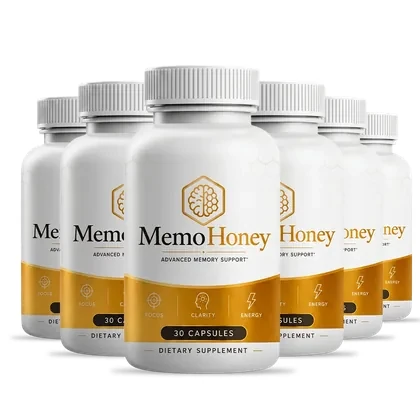
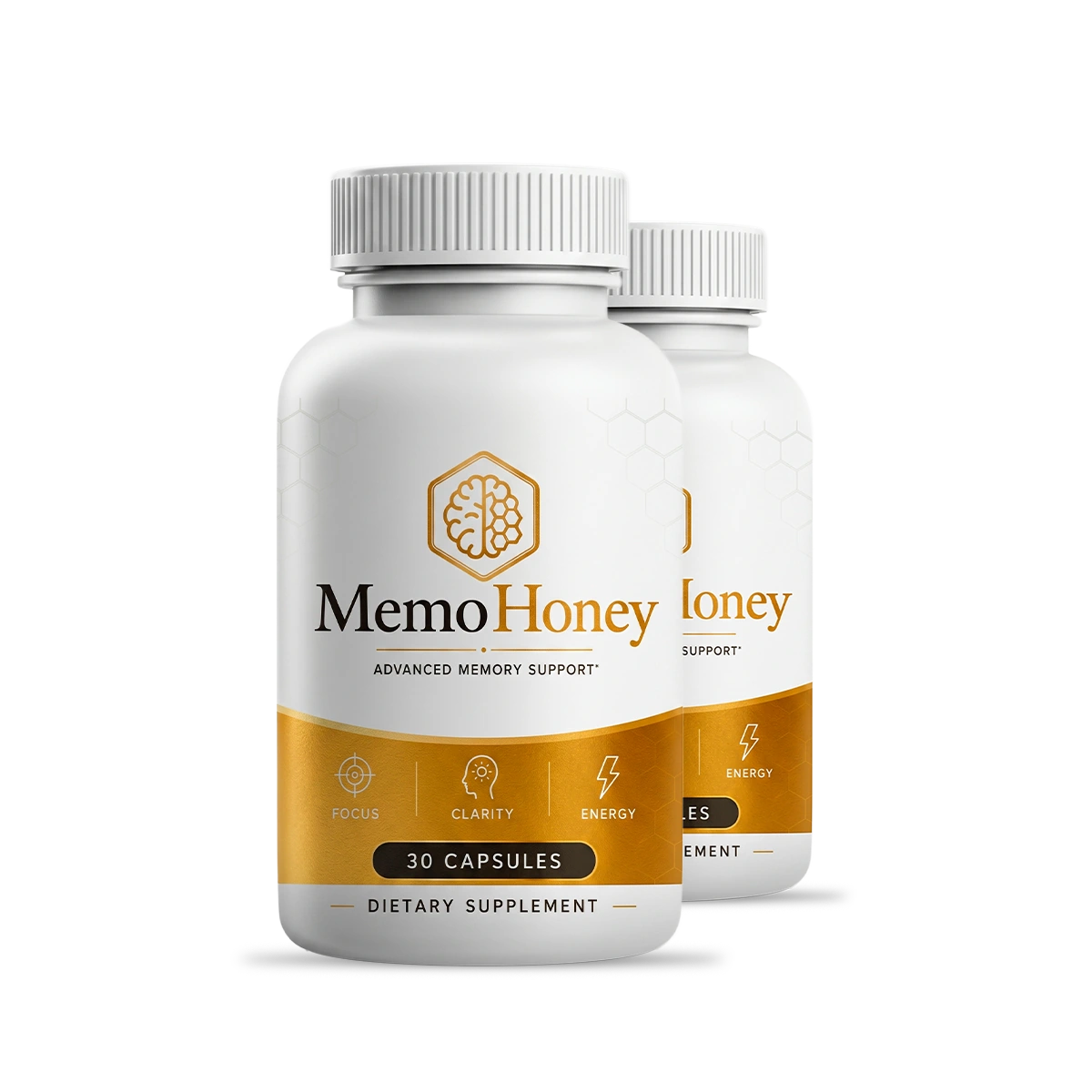
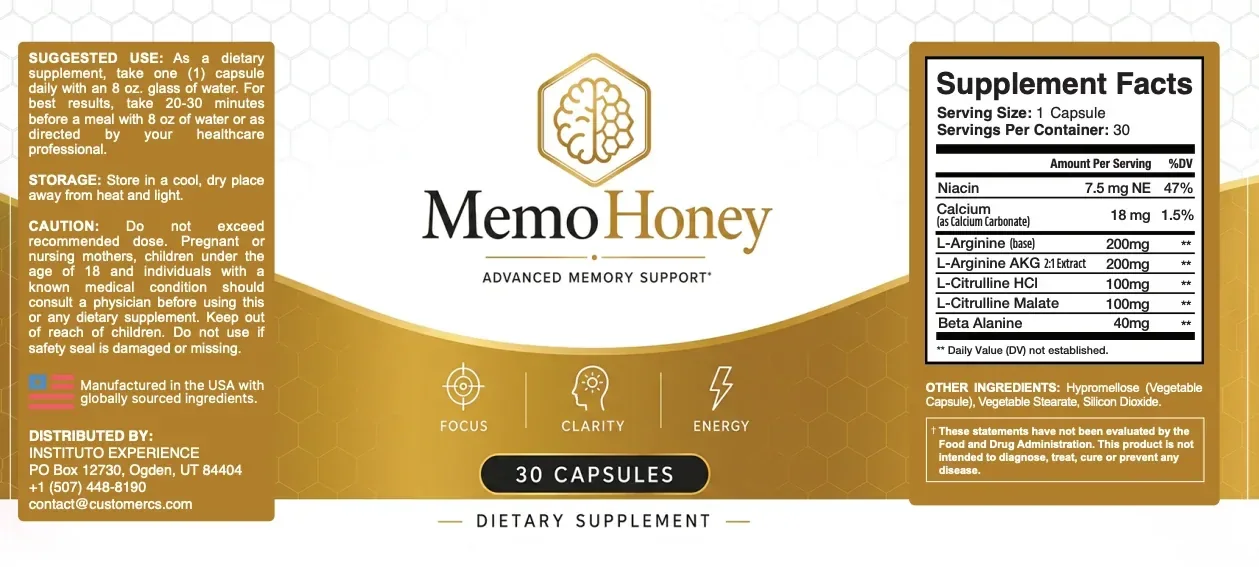
The front of a MemoHoney bottle is easy to read. Look for the name, the amber band reading Advanced Memory Support, the three words beneath it, Focus, Clarity and Energy, and a badge reading 30 Capsules, with the words Dietary Supplement. These are the words the label uses to describe what the capsule is for, and every genuine bottle carries them.
If a word is missing or spelled differently, or the count is not 30, stop there and photograph it.
MemoHoney: a bottle you can check against its label
Seven printed rows, a sealed bottle, a lot on the base. Ordered here, it can always be matched to your order.
$79, $69 or $49 a bottle across two, three and six bottles, 60 days on every pack
Choose A MemoHoney PackOne capsule a day, 30 to a bottle. Lot MEM-26/GO-8806, shipped from the United States.
The panel, row by row
Turn the bottle to the Supplement Facts panel. The serving should read one capsule, with thirty servings per container. Below that, seven rows: niacin 7.5 mg NE at 47% of the Daily Value, calcium 18 mg at 1.5%, then five amino acids without a Daily Value: L-arginine 200 mg, L-arginine AKG 200 mg, L-citrulline HCl 100 mg, L-citrulline malate 100 mg and beta alanine 40 mg.
The calcium row is the one to notice. The advertising names six ingredients and leaves calcium off, so a panel that shows it is the correct panel, not a different formula. The Supplement Facts page prints the panel in full if you want to compare line by line.
| Where | What your bottle should show | Takes |
|---|---|---|
| Under the cap | An intact safety seal | 10 seconds |
| The front | MemoHoney, Advanced Memory Support, Focus, Clarity, Energy, 30 Capsules | 10 seconds |
| The panel | Seven rows with calcium among them; serving one capsule; 30 servings | 30 seconds |
| Other ingredients | Hypromellose shell (vegetable capsule) plus vegetable stearate and silicon dioxide | 10 seconds |
| Directions and caution | One capsule with 8 oz of water, 20–30 minutes before a meal; adults only | 20 seconds |
| The base | A lot number, and a best-before date where shown | 10 seconds |
Read off the MemoHoney label wrap and panel. About ninety seconds in all.
The directions and the caution
Beside the front are the directions: one capsule a day with an 8 oz glass of water, best taken 20 to 30 minutes ahead of a meal, unless a healthcare professional directs otherwise. Under them sits the caution block, which begins with do not exceed recommended dose, asks pregnant or nursing mothers, anyone under 18 and anyone with a known medical condition to consult a physician first, and ends with the seal rule.
Two further lines complete the label. The storage line asks for a cool, dry place away from heat and light. The origin line reads: “Manufactured in the USA with globally sourced ingredients.” Under the panel, the label names its distributor, Instituto Experience, Ogden, Utah.
Arginine and citrulline act on nitric oxide, the signal that relaxes blood vessels. If you take blood-pressure medicines, nitrates or erectile-dysfunction drugs, talk to your prescriber before the first capsule.
The base: lot and best-before
Tip the bottle over. The base carries a lot number, printed or stamped, and a best-before date where the bottle shows one. Note both, or photograph them, before the bottle goes into a cupboard.
This desk’s stock is filed under lot MEM-26/GO-8806, with certificate reference MEM-8806-26-GO. Those are filing references for the stock this desk ships, and order support can match the lot on your bottle to your order. They identify a batch; they are not a laboratory result. The bottle-check page keeps the same record.
Checking a multi-bottle pack
Most orders on this desk are for three or six bottles, and the check is worth doing on each one, not only the first. It takes the same ninety seconds a bottle, and it is far easier on the day the parcel arrives than months later when the fourth bottle comes out of the cupboard.
Leave the unopened bottles sealed until you need them, and keep them together in the same cool, dry place. If the bases carry different lot numbers, that is normal for stock shipped over time; photograph each base so every bottle can be matched to the order if a question ever comes up.
When to look again
One check on arrival covers most of what matters, but three later moments are worth a glance. Look at the seal again when each new bottle is opened, since the first check may have been weeks earlier. Look at the best-before date before starting the last bottle of a six-bottle pack. And look at the capsules themselves now and then: they should stay dry, separate and the same colour from the first week to the last.
None of these takes more than a few seconds, and each one keeps the photographs you took on day one useful for the life of the pack.
Storing the bottle once it is open
The storage line on the label is short: “Store in a cool, dry place away from heat and light.” In practice that rules out the two places most bottles end up. A bathroom cabinet sees steam every morning, and a windowsill sees heat and sun. A kitchen cupboard away from the oven, or a bedroom drawer, does the job.
Keep the lid closed between capsules, keep the capsules in their own bottle so the lot and best-before stay with them, and keep the bottle out of reach of children, as the caution asks. A capsule that has softened, stuck together or changed colour is a reason to call order support rather than to take it.
If something does not match
- Keep the bottle sealed, or stop using it if it is already open.
- Photograph the seal, the panel and the base.
- Call the order desk (number in the footer) with the order ID from your confirmation email. The website email cannot see orders.
- If a return is needed, wait for the go-ahead and the address in writing; returns go to 3 Park Avenue, Floor 36, New York, NY 10016, USA.
A bottle bought through this website can always be matched to an order here, and that is what makes the 60-day window on this desk apply to it. The guarantee page explains the rest.
What the check covers, and what it leaves to others
A bottle check confirms that what arrived is the product the label describes: sealed, correctly labelled, with the right panel, and traceable to a lot. That covers the questions a buyer can settle at home, and they are the ones that come up in practice.
It cannot measure what is inside a capsule; only a laboratory can do that, and under the federal rules the company that makes a supplement is responsible for the contents matching the label. The testing-and-quality page sets out what each of the seller’s seals covers (they are the seller’s artwork, not marks printed on the bottle, so there is nothing of them to check on arrival), and the lot reference on the base is what ties a bottle back to its batch record at the factory.
Keep a short record
Two photographs are worth keeping for the life of the bottle: the panel and the base. With the order email, they answer almost any later question in one call. They are also useful at an appointment, because NCCIH advises telling the people who look after your health about every supplement you take, and a photo of the panel says it exactly.
The panel photo helps at home too. The niacin row is the one worth adding to your other labels, because niacin has an adult upper intake of 35 mg a day from supplements, set by the Institute of Medicine. One capsule carries 7.5 mg NE.
Sources cited in this post
- U.S. Food and Drug Administration: Questions and Answers on Dietary Supplements, guidance read online. https://www.fda.gov/food/information-consumers-using-dietary-supplements/questions-and-answers-dietary-supplements
- Office of Dietary Supplements, National Institutes of Health: Dietary Supplements: What You Need to Know, guidance read online. https://ods.od.nih.gov/factsheets/WYNTK-Consumer/
- National Center for Complementary and Integrative Health, National Institutes of Health: Using Dietary Supplements Wisely, guidance read online. https://www.nccih.nih.gov/health/using-dietary-supplements-wisely
- Institute of Medicine (US), 1998: the niacin chapter of Dietary Reference Intakes for Thiamin, Riboflavin, Niacin, Vitamin B6, Folate, Vitamin B12, Pantothenic Acid, Biotin, and Choline, National Academies Press, NCBI Bookshelf NBK114304. This is where niacin equivalents (NE) are defined and where the adult ceiling of 35 mg a day from supplements comes from, set to avoid flushing. https://www.ncbi.nlm.nih.gov/books/NBK114304/